In this article:
What changed: Added data on 560 registered dengue cases for September 14–20 and a warning about danger signs after temperature drops. Expanded recommendations after animal bites and rules for carrying personal medications.
Health risks in Thailand are best considered while you are still preparing: pack protection against mosquitoes and sun, choose safe water and food, and avoid contact with animals. Check your personal medications, the terms of your insurance policy, and help contacts. These measures help reduce risks, although they cannot completely rule out illness or injury.
Emergency medical assistance — 1669. In a serious condition, do not delay calling to look for a diagnosis or to get approval from your insurer. If you need a broader guide to everyday situations, save the guide to safety in Thailand.
This article is for information only and does not replace a doctor’s consultation. Current as of publication; medical recommendations, the epidemiological situation, and conditions may change.
Below are prevention methods and actions to take if you feel worse. For long-term stays, trips to forested areas, or travel with chronic conditions, it is best to discuss preparation with a doctor in advance.
Dengue: protection from mosquitoes, symptoms, and medical care
Dengue is a viral infection spread through mosquito bites. As noted in the CDC travel recommendations for Thailand, it is endemic nationwide: transmission peaks during the rainy season, but cases are reported year-round. Dry weather does not cancel protection against bites.
The European Center for Disease Prevention and Control (ECDC) report provides 560 registered cases for September 14–20. This is weekly data, not an annual total. It does not determine the likelihood of infection for a specific traveler and does not allow assessing the safety of an individual hotel or tour.
How to protect yourself from bites during the day
Mosquitoes that carry dengue are active during the day too. So a bed net at night helps protect your room, but does not replace repellent and clothing when you are outdoors. Prepare protection for different situations:
- Use repellent with a suitable active ingredient: diethyltoluamide (DEET), picaridin, or IR3535.
- Reapply according to the product’s instructions, as there is no universal interval for all products.
- Wear light pants and long-sleeved clothing, especially on walks by the water and in parks.
- Use mosquito nets; use fumigators according to the instructions.
- Remove open containers of standing water from balconies and around your accommodation.
When to see a doctor and how tests are chosen
A fever, headache, muscle and joint aches, or a rash is a reason to see a doctor rather than diagnosing dengue yourself. According to WHO, when symptoms occur, they usually begin 4–10 days after infection and last 2–7 days. Most people recover within 1–2 weeks.
A specialist chooses the tests based on the day of illness and the patient’s condition. The CDC recommends the NS1 antigen test to detect infection within the first 7 days of illness. You do not need to order a test yourself or delay a visit until a suitable day.
In the CDC dengue guidance, paracetamol is also listed as acetaminophen. If dengue is suspected, do not take aspirin or ibuprofen. Discuss the choice of fever reducer, rest, and fluids with your doctor; dosages depend on the patient.
Why a drop in temperature does not always mean recovery
The CDC warns that danger signs can appear within 24–48 hours after the fever disappears. How you feel and your doctor’s advice during this period matter more than the number on the thermometer. If your condition worsens, seek help again, and if you are seriously ill, call 1669.
Do not rush back to excursions just because your temperature has dropped. Recovery time varies from person to person, and the question of dengue vaccination requires an individual discussion with a doctor.
Foodborne infections: safe food, water, and what to do with diarrhea
Food poisoning in Thailand cannot be reliably identified by where you ate: at a restaurant or from a street vendor. For choosing food, cooking, freshness, and storage matter more. A line at a street food stall does not in itself guarantee safety.
For drinking, choose sealed bottled water. If the quality of the water is unknown, use safe water for brushing your teeth as well. The shape of the ice also does not show what water it was made from.
Simple habits help reduce the risk:
- Wash your hands before eating.
- Choose well-cooked dishes.
- Be careful with raw foods and salads.
- Avoid cut fruit and ready-made food that has been sitting in the heat for a long time.
- Judge storage conditions, not just how popular a spot is.
Details on choosing food and drinks are in the guide to food and water safety in Thailand.
If you develop diarrhea
The clinical guidance recommends oral rehydration salts (ORS) to replace fluids and electrolytes during diarrhea. Prepare the solution according to the instructions on the package, using safe water. Sweet drinks can worsen diarrhea and do not replace such a solution.
Choose foods you can tolerate, such as rice, bananas, toast, or applesauce. These are gentle options, not a mandatory treatment plan. If fatty or spicy foods, dairy products, or coffee make you feel worse, temporarily avoid them.
According to the CDC, diarrhea lasting longer than 3 days is a reason to seek medical care. But if there is blood in the stool, inability to drink or keep fluids down, or signs of dehydration, help is needed sooner. Dry mouth, dark urine, and dizziness should not be dismissed as just the heat.
Do not choose antibiotics, adsorbents, or local remedies on your own based on advice from acquaintances. The causes of diarrhea vary, so no single recovery time can be promised.
Heat and sun: preventing overheating and sunburn
Protecting your skin from the sun and preventing overheating serve different purposes. Sunstroke is associated with direct sun exposure to the head, but you can overheat without it. Shade does not cancel breaks and reduced exertion, especially after a flight.
Ease into it: gradually increase the length of walks and take breaks in a cool place. Wear a hat and light clothing, and move intense activities to cooler times of day. The excursion can wait if you feel worse.
Sun protection and fluids
WHO recommends a product that protects against UVA and UVB, with SPF of at least 30. It is recommended to reapply every two hours; also follow the instructions for the specific product. Higher protection is acceptable, but sunscreen does not replace clothing and rest in the shade.
Keep safe water within reach. There is no single fluid intake target for everyone: needs may depend on activity, weather, and health. If you have fluid restrictions, follow your doctor’s advice, and do not start rehydration solutions on your own just because it is hot.
When emergency help is needed
Headache, nausea, and dizziness are a reason to stop and assess your condition. Confusion and marked deterioration require emergency help: call 1669, move the person to a cool place, and follow the dispatcher’s instructions. Do not wait for a specific body temperature.
The National Institute for Occupational Safety and Health (NIOSH) of the United States notes that in heat stroke the skin may be hot and dry, or heavy sweating may be present. This means a person can continue to sweat even when dangerously overheated. You cannot judge safety from this sign alone.
Snakes, dogs, and monkeys: how to avoid bites
Dangerous animals in Thailand call first of all for keeping your distance. Do not touch snakes, and do not feed monkeys or street dogs, even if the animal seems calm. You do not need to get closer for a photo.
On walks, watch where you step, and use a flashlight in the dark. Do not put your hands into gaps between rocks, and check your shoes before putting them on. These habits are also useful around your accommodation.
What to do if bitten by a snake
Arrange immediate medical care, without first trying to identify the snake species. The steps are brief:
- Call 1669 and report your location.
- Limit movement of the injured person and the affected limb.
- Follow the dispatcher’s instructions and arrange transport to medical care.
- Photograph the snake only from a safe distance, and only if this does not delay help.
According to the CDC, do not apply a tourniquet that blocks blood flow, cut the wound, or try to suck out the venom. Do not try to catch the animal or go back to it for a photo. Treatment decisions are made by medical professionals.
Dog and monkey bites: wound care and seeing a doctor
After an animal bite or scratch, the CDC recommends washing the wound with running water and soap for at least 20 minutes and seeking medical care immediately. A small wound is not a reason to delay an examination.
A doctor will assess the wound and the need for rabies prevention. Tell them which animal caused the injury and what vaccinations you have had. Do not wait for symptoms to appear before deciding whether you need help.
Centipedes and other unwanted contacts
Do not pick up unfamiliar animals or insects with your hands, and check your shoes and any items left on the floor. After a bite, do not use cauterization or other home remedies. If you have severe pain or your condition worsens, see a doctor, and do not rely on assurances that a particular animal’s bite is safe.
Jellyfish and sea urchins: safe swimming and first aid
Before swimming, pay attention to beach warnings and lifeguards’ instructions. Contact with a jellyfish can be dangerous, and it is hard to choose the right help based on how the mark looks. The priority is to get out of the dangerous situation and get help from lifeguards.
On rocky or coral bottoms, move carefully and wear protective footwear. Do not touch marine animals, and do not put your weight on areas of the bottom that are hard to see. Footwear helps reduce the risk of injury, but does not make every area safe.
If you are stung by a box jellyfish
The vinegar recommendation applies specifically to box jellyfish, not to every marine injury. The Tourism Authority of Thailand (TAT) recommends pouring vinegar over the affected area for at least 30 seconds. A study of box jellyfish describes using food vinegar with an acetic acid concentration of 4–6% and continuous pouring for at least 30 seconds to inactivate stinging cells that have not yet fired.
For this kind of sting, do not rinse the area with fresh water or touch the tentacles with bare hands. If the species is unknown, contact lifeguards and follow their instructions instead of using a universal home remedy. Vinegar does not replace medical care if the condition is serious.
If your condition worsens markedly after marine contact, call 1669. Do not delay help to look for vinegar or to remove tentacles on your own.
If you step on a sea urchin
Stop swimming and get a medical assessment of the injury. Do not crush the spines, do not cauterize the wound, and do not try to treat it with hot water. Tell the doctor how the injury happened, especially if walking is painful or your condition worsens.
Other risks: skin, allergies, roads, smog, and the rainy season
Health risks in Thailand depend not only on the country, but also on your activities, route, and health. Preparation will differ for a trip to the north, beach holidays, and walks during the rainy season. There is no single list of “most dangerous regions” for all travelers.
Skin, allergies, and dehydration
Clean small scratches and abrasions, use a suitable antiseptic, and protect the injuries with a clean dressing. Do not walk barefoot in shared showers, and carefully choose where to walk without shoes. If a wound or rash gets worse, a medical assessment is needed.
Do not assume that every rash is a tropical infection or pityriasis rosea. Similar outward signs do not give a reliable diagnosis. You may include your usual allergy medication in your first-aid kit, but for a severe reaction or a worsening condition, it does not replace seeking help.
Heat, physical activity, and alcohol can make it harder to manage fluid intake and how you feel. Keep water within reach and take breaks before continuing a walk becomes difficult. If you have a condition that requires fluid restriction, discuss your regimen with a doctor in advance.
Road injuries
Trips on a motorbike require separate preparation and a check of your insurance policy. Do not rely on the general clause about injury treatment: read the terms specifically for the transport you choose and the requirements for driving documents. Practical recommendations are in the article on road safety in Thailand.
Smog in the north and infections in the rainy season
The CDC notes deteriorating air quality in northern provinces from February to April due to agricultural burning and forest fires. If you have asthma or other respiratory conditions, discuss your route and protection with a doctor. A separate guide explains smog and fine particulate matter in Thailand.
According to the CDC, leptospirosis is mainly reported in the south and northeast, while melioidosis is highly endemic in the northeast. For both diseases, most cases occur in July–October. This information describes seasonality and geography, not the likelihood of illness for a specific traveler.
Be cautious about walking through flooded areas and contact with contaminated water. The seasonal calendar does not replace an assessment of current conditions on your route. If you become ill, tell your doctor about recent trips and such contacts.
First-aid kit and personal medications: preparation and import rules
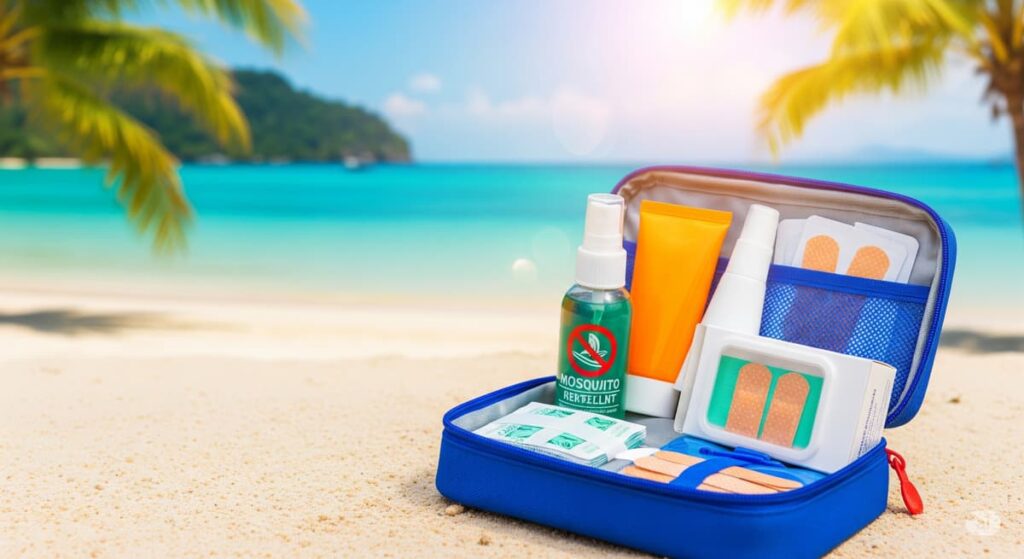
A basic first-aid kit for Thailand is for familiar remedies and minor injuries. It does not replace a doctor and should not turn into a set of medicines “for everything.” Choose medicines whose use you understand.
The following list will help you prepare:
- Paracetamol.
- Oral rehydration salts.
- Your usual allergy medication.
- Antiseptic.
- Adhesive bandages and gauze.
- Insect repellent.
- Sunscreen SPF 50+ — as one option.
- Personal prescription medicines with documents and verified import conditions.
WHO describes minimum sun protection separately: SPF of at least 30 with protection against UVA and UVB. The additional list will help you decide what to pack in your first-aid kit for Thailand. Discuss dosages and ongoing treatment with your doctor.
Common medications and controlled substances
The Thai Food and Drug Administration (Thai FDA) describes personal import of ordinary finished medicines in amounts for no more than 30 days of use. It recommends original packaging and a doctor’s prescription. Therefore, advice to bring a supply “for the entire vacation” should not be followed without checking the medicine’s category.
Separate conditions are set out in the Thai FDA regulations for travelers with controlled medicines. For certain permitted categories of medicines containing narcotic substances, an amount for up to 90 days of prescribed use is provided. For the corresponding permitted categories of psychotropic medicines, a supply of no more than 30 days is described.
These periods are not a general permission for every medicine. If a medicine requires a permit, the application must be submitted at least 15 days before the trip. Before your flight, check the composition, category, and import conditions with the Thai FDA.
Keep the name of the active ingredient and information about the prescription for ongoing treatment. Discuss finding a substitute with a doctor or pharmacist. Being able to buy a product at a pharmacy does not mean it is safe to choose it yourself.
Medical care and insurance: where to go
Medical care in Thailand is available at various facilities, but the choice depends on your condition and location. The UK Foreign, Commonwealth & Development Office (FCDO) describes private hospitals as high-standard facilities and warns that treatment can be expensive. There is no single price that applies to all cases.
In an emergency, do not delay help to get approval from your insurer. For a planned visit, it is useful to find out in advance how to choose a hospital in Thailand. Check availability for your specific location, including island stops and remote parts of your route.
Contacts and information for reaching help
Save 1669 — emergency medical assistance, according to the FCDO. 1155 — tourist police hotline, according to the Thai Tourist Police Bureau. For a medical emergency, use the medical number.
Prepare information you can share quickly:
- Your location and clear landmarks.
- Symptoms and circumstances of the injury.
- Medications you are taking.
- Known allergies.
- Policy details and the assistance contact: your insurer’s assistance service.
Write down your accommodation address and keep this information easy to access without a long search. A more detailed procedure for emergencies in Thailand is worth saving before your trip.
What to check in your policy
Check outpatient and inpatient treatment, road injuries, motorbike trips, and evacuation. Read the exclusions, deductible, and document requirements, including driving documents for the transport you choose. Insurance for Thailand should match your activities and route.
The procedure for payment, approval, and submitting documents depends on the specific policy. Keep medical reports and payment documents, following your insurer’s requirements. For help choosing, see the guide on how to choose travel insurance for Thailand.
Quick guide to getting help
The table helps you choose the next step, but is not intended for self-diagnosis. In a serious condition, emergency help remains the priority.
| Situation | Action | Getting help |
|---|---|---|
| Suspected dengue | Do not take aspirin or ibuprofen; tell the doctor your symptoms and the day of illness | See a doctor, who will choose the tests |
| Worsening after the temperature drops | Do not treat the disappearance of fever as confirmation of recovery | Seek help again; if seriously ill, call 1669 |
| Prolonged diarrhea | Replace fluids and electrolytes; monitor your ability to drink | See a doctor; if there is blood in the stool or dehydration, do not wait |
| Animal bite or scratch | Wash with running water and soap for at least 20 minutes | Seek medical care immediately |
| Snake bite | Limit movement; do not apply a tourniquet that blocks blood flow, do not cut the wound, and do not suck out the venom | Call 1669 and arrange immediate help |
| Serious condition after marine contact | Get out of the dangerous situation and get help from lifeguards | Call 1669; first aid at the scene does not replace help |
Frequently Asked Questions ❓
Which vaccinations are needed for a trip to Thailand?
Discuss preparation with your doctor, taking into account your route, trip length, age, and health. Bring records of your past vaccinations and clarify individual recommendations. A decision about vaccination does not replace protection from mosquito bites or caution around animals.
Is it safe to drink tap water in Thailand?
For drinking, choose sealed bottled water. If the quality of the water is unknown, use safe water for brushing your teeth as well. The shape of the ice and how popular an establishment is do not by themselves guarantee safety; food preparation and storage also matter.
What should you do if you are bitten by a snake?
Call 1669 and arrange immediate medical care. Limit the injured person’s movement, do not apply a tourniquet that blocks blood flow, do not cut the wound, and do not try to suck out the venom. Do not approach the snake for a photo, and do not delay getting to a hospital.
Do you need insurance for Thailand, and what should it cover?
Insurance helps you prepare for possible treatment costs. Check outpatient and inpatient care, evacuation, the deductible, and exclusions; for a motorbike, separately read the terms on injury coverage and the document requirements. Save the assistance contact and follow the procedure for seeking help described in your policy without delaying emergency care.
How can I protect myself from dengue fever?
Protect yourself from bites during the day too: use repellent as directed, wear clothing that covers your skin, and protect your accommodation. The CDC lists diethyltoluamide (DEET), picaridin, and IR3535 among repellent active ingredients. If you become ill, see a doctor: a drop in temperature does not always mean the dangerous period is over, and discuss vaccination individually.
Which regions of Thailand have the most health risks?
There is no single ranking for all travelers: route, season, activities, and health all matter. Dengue occurs throughout Thailand, and the northern provinces are characterized by deteriorating air quality from February to April. Also consider marine contact, trips to forested areas, rainy-season conditions, and the availability of help in your specific location.
Can you buy medicines in Thailand without a prescription?
Whether you can buy a medicine depends on the specific product; being available for sale does not mean it is safe to take on your own. Discuss ongoing treatment and finding a substitute with a doctor or pharmacist. Before importing, check the category: the Thai FDA describes a personal supply of no more than 30 days for ordinary finished medicines, and separate conditions apply to controlled substances.
Conclusion
Health risks in Thailand can be reduced through preparation and attention to how you feel. Before your trip, check this short list:
- Protection from mosquito bites and keeping your distance from animals.
- Sun protection, a hat, and breaks.
- Safe water and careful food choices.
- A first-aid kit and verified import conditions for personal medications.
- Your policy, assistance contact, and help numbers.
Save this guide and the contacts in advance so you do not have to search for them when you feel unwell. For an animal bite, suspected dengue, or a marked deterioration, seek medical care without unnecessary waiting. Medical recommendations, the epidemiological situation, and conditions for importing medications may change; preparation does not provide full protection, but it helps you act in time.
Prepared by MyThai.online editorial team.