In this article:
What changed: The article lists visiting hours of 08:00–17:00 and travel reference points: from central Phuket Town — 15–20 minutes, from Patong — about 30 minutes by car. Recommendations on clothing and photography in the temple have been added.
Wat Chalong is an active Buddhist temple in the Chalong district on Phuket. The Tourism Authority of Thailand describes it as the most revered temple on the island; its official name is Wat Chaithararam. Admission is free, and the visiting hours reference is 08:00–17:00 as of October 2026.
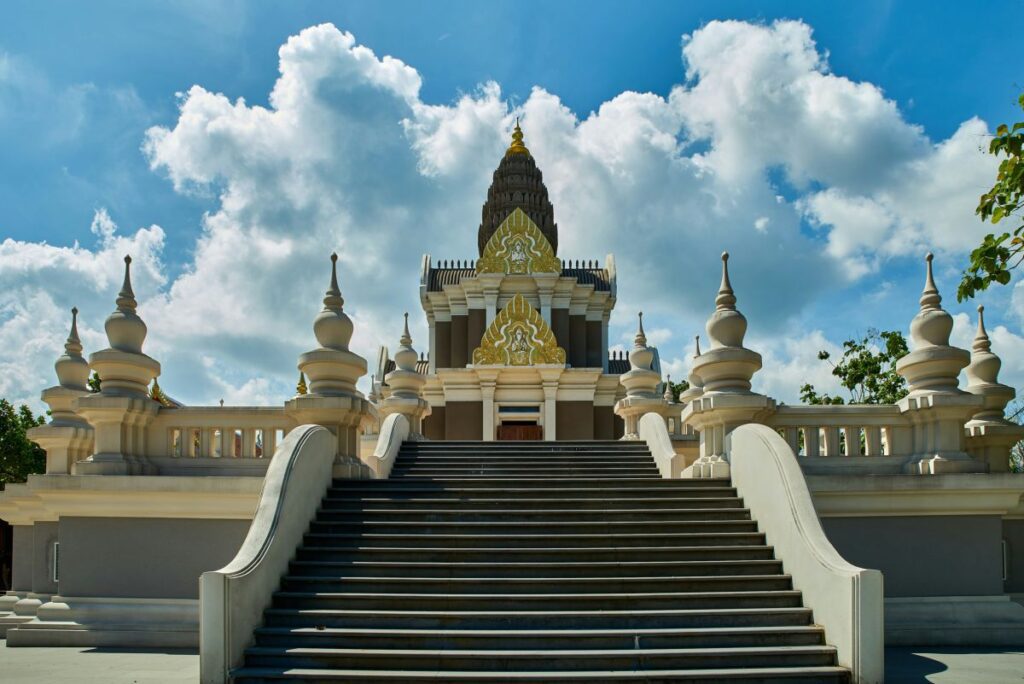
The main attraction is the large chedi Phra Mahathat (Grand Pagoda) housing a relic of the Buddha. Besides it, you can see images of revered monks, murals, and walk between the temple buildings. For your visit, prepare clothing that covers the shoulders and knees, and leave time for a relaxed look around.
You can make the temple a separate stop or include it in a trip around the island. If you are planning a route, see other attractions in Phuket — this will make it easier to choose how to continue your day based on your interests.
Opening hours and admission fee at Wat Chalong
Visiting hours 08:00–17:00 as of October 2026 are listed in the official listing of the Tourism Authority of Thailand, published by the Japanese representative office. Plan your visit within this window, including visits to the temple buildings. Do not count on round-the-clock access.
Admission is free; donations are voluntary. The official tourism listing indicates free admission, while a Phuket travel guide separately notes that donations are voluntary. If you wish, you can leave a donation in the box provided for this purpose; it does not become a mandatory ticket.
According to the same guide’s recommendation, a regular visit can take about an hour, while going up the chedi and stopping for photos — up to 90 minutes as of October 2026. This is a planning guideline, not a limit on how long you can stay. If you want to sit on the grounds or look more closely at the murals, allow more time.
The complex has a parking area. If you travel by car, allow time to find a space: having parking does not mean a space will be available at any given moment.
What to see at Wat Chalong: the large chedi, statues and murals
It is convenient to organize your visit around the chedi, the prayer hall, and a walk through the grounds. This order helps you see the architecture, learn about the religious significance of the complex, and leave time for details. This is a suggestion for a self-guided visit, not a required route between the buildings.
The large chedi Phra Mahathat (Grand Pagoda)
The chedi stands about 60 meters tall and has three levels. Inside are murals about the life of the Buddha, images and statues, and on the top floor, a glass case holds a fragment of the Buddha’s bone. According to a Phuket travel guide, the relic was a gift from Sri Lanka.
The upper terrace offers a view of the temple complex from above. A hotel guide (Rosewood) describes it, but during your visit follow the open passages and any restrictions on site. Do not build your whole visit around getting access to every room.
The prayer hall and statues of revered monks
In Wat Chalong Prayer Hall, take note of the images of revered monks. Visitors bring offerings and cover the statues with thin gold leaf. Their golden appearance comes from this practice: it would be wrong to describe the statues themselves as made of gold.
The murals in the chedi and the gold leaf on the images of monks reveal different aspects of temple life. The former tell the story of the Buddha, while the latter relate to visitors’ veneration of monks. It is worth slowing down here to look at the details rather than settling for a quick snapshot of the building.
Why firecrackers are set off on the temple grounds
Sudden bangs may accompany a thanksgiving ritual. According to a travel guide (Silq), believers light firecrackers in a brick oven as thanks for prayers that have been answered. If you are visiting with children or are sensitive to loud noises, be prepared for the bangs to be unexpected.
Between the buildings you can continue your walk through the spacious, well-kept grounds. There are landscaped gardens, stupas, and sculptures here, so the visit is not limited to a single structure. Leave time simply to stroll between the buildings.
History of Wat Chalong and the revered monks
The temple’s official name is Wat Chaithararam, though travelers more often know it as Chalong. The original construction date is unknown. The Thaiger, a publication about Thailand, reports that according to surviving records, the temple was rebuilt and relocated in 1837; this year should not be treated as a firmly established founding date.
Luang Pho Chaem and Luang Pho Chuang hold a special place in history. They are revered for helping local residents during the uprising of tin mine workers in 1876. The official tourism listing links the images of monks installed in the temple specifically to this assistance.
A Thailand travel site (Thailand Nomads) also describes helping the wounded using knowledge of herbs. This is a historical account of the monks’ role, not medical advice. Today, remembering them helps explain why visitors come here not only for the architecture but also for prayer and to show respect.
Dress code and rules of conduct in the temple
Prepare your clothing in advance: beachwear is not suitable for visiting the temple buildings. Covered shoulders and knees are a general recommendation for all visitors. Do not count on being given a wrap at the entrance.
Clothing with long sleeves, long pants, or a skirt that reaches the knee are listed in the recommendations of Thailand’s government portal. A Phuket travel guide also recommends covering shoulders and knees and removing shoes and headwear before entering the buildings.
A short list of preparations:
- Choose a top with long sleeves and covered shoulders.
- Wear long pants or a skirt that covers the knees.
- Be ready to take off your shoes before entering the temple buildings.
- Remove headwear when entering the buildings.
Inside, behave calmly. Do not make noise or talk loudly in the prayer halls, and do not point the soles of your feet at images of the Buddha. If you sit down, choose a position in which your legs are not stretched out toward sacred images.
Do not take photos where photography is prohibited. Before photographing monks, ask permission with a gesture or a word. Being able to photograph the architecture does not mean people have agreed to be in the frame.
When interacting with monks, keep your distance. These tips concern respectful behavior; more cultural background is in the rules of etiquette in Thailand.
How to get to Wat Chalong from different points on Phuket
The temple is located roughly 8 km southwest of Phuket Town. This is a geographic reference point, not a measured road length. Your route from your accommodation may differ.
The Japan office of the Tourism Authority of Thailand lists the following travel reference points as of October 2026. Travel time depends on the starting point and road conditions, so do not schedule your next stop without a buffer.
| Departure point | Travel reference | What to consider |
|---|---|---|
| Central Phuket Town | About 15–20 minutes by car | The figure applies to the city center |
| Patong | About 30 minutes by car | Actual time depends on the departure point and traffic |
| Kata and Karon | Plan based on the route from your accommodation | Compare the direct trip with a route that includes other stops |
| Big Buddha (Phuket Big Buddha) | Plan based on the current driving route | Allow time for the drive and a separate visit to the temple |
For a self-guided trip, taxis or a car ordered through an app (Grab) will work. An organized tour is another option if you want to visit several places on a shared program. Before choosing, compare the trip terms and the time you can spend at the temple.
For navigation, open the link Wat Chalong on the map. If you are choosing how to travel between districts of the island, see transportation options on Phuket. Also plan the next part of your route in advance: returning to your accommodation or continuing to see the sights.
The best time to visit Wat Chalong
For a calmer visit, choose the start of the day after opening or a time closer to the end of hours. This advice comes from a Thailand travel site (Thailand Nomads). It helps plan the trip but does not guarantee an empty site.
Plan your morning arrival for after 08:00, based on the visiting hours as of October 2026. If you arrive closer to closing, leave enough time for the chedi and the prayer hall. A late arrival should not turn your visit into a rush.
A temple guide (Renown Travel) recommends a weekday: on weekends and Thai public holidays the grounds can be crowded. If you can choose your travel day freely, this is a useful guideline. Calm also depends on what is happening at the temple during your visit.
Buddhist holidays, including Makha Bucha, Visakha Bucha and Asalha Bucha, offer a different cultural context for a visit, with ceremonies and larger numbers of worshippers. To experience everyday atmosphere, it is better to choose an ordinary day. To observe festival life, you will need more patience for crowded spaces.
What to see near Wat Chalong
Choose how to continue your trip based on your interests: another religious site, a city walk, or sunset. You do not need to include every place in one day. It is better to leave time for the stops you choose than to build a route just to pack in as many as possible.
Big Buddha on Phuket — a statue standing 45 meters. According to a Phuket travel guide, the site reopened March 3, 2026 in time for Makha Bucha and has remained open since. Before your trip, check whether the site is accessible: the guide’s report does not replace current visiting conditions.
Another option is Phuket Old Town, which you can view on the map. Its Sino-Portuguese architecture and cafes are suitable for continuing your day in town. This is a separate alternative to visiting the Big Buddha, especially if you want to swap the temple sightseeing for a walk along the streets.
Chalong Pier — the starting point for boat tours to the islands. Its location can be included in your trip plan; for navigation, open the link Chalong Pier on the map. It is a useful stop if you are interested in the coastal part of the district.
To end your day, you can choose Promthep Cape, located here. The route “temple → Big Buddha → Promthep Cape” can be included in your day plan, but its length depends on the road and your pace. If you want to arrive for sunset, plan the day around this stop rather than assuming you can fit everything into half a day.
Frequently Asked Questions ❓
How much does admission to Wat Chalong cost?
Admission is free. Donations are welcome but remain voluntary: you can leave one if you wish.
What time does Wat Chalong open and close?
The official tourism listing from the Japan office of the Tourism Authority of Thailand (TAT Japan) gives visiting hours of 08:00–17:00 as of October 2026. Plan your visit within this window and do not count on round-the-clock access.
What is the dress code at Wat Chalong?
Choose clothing that covers your shoulders and knees: a top with long sleeves, long pants, or a suitable skirt. Remove your shoes and headwear before entering the temple buildings. It is best to prepare your clothing in advance.
How do I get to Wat Chalong from Phuket Town?
The temple is about 8 km southwest of the city; this is a location reference, not the exact length of the road. According to the official tourism listing, a trip from central Phuket Town takes about 15–20 minutes by car as of October 2026. For navigation, use the temple’s name (Wat Chalong) and the map from the transportation section.
How much time do you need to visit Wat Chalong?
According to a travel guide, a regular visit can take about an hour, while going up the chedi and stopping for photos can take up to 90 minutes as of October 2026. This is a planning guideline, not a set length of visit. If you want to linger on the grounds, allow more time.
What is the large chedi (Grand Pagoda) at Wat Chalong?
It is the Phra Mahathat chedi, about 60 meters tall with three levels. Inside is a fragment of the Buddha’s bone, which, according to a travel guide, was a gift from Sri Lanka. The rooms are decorated with murals, and the temple complex can be seen from the upper terrace.
Can you combine Wat Chalong with the Big Buddha in one day?
These sites can be included in one route, and if you like, you can continue the trip to Promthep Cape. According to a travel guide, the Big Buddha reopened on March 3, 2026 and remains open. Before your trip, check whether the site is accessible; when planning, take road conditions and time for sightseeing into account.
Conclusion
To visit, it is enough to choose suitable clothing in advance, plan the route, and arrive during the stated visiting hours. Admission is free, and whether to donate is up to you. Start with the chedi and the prayer hall, then leave time for a walk among the buildings, gardens and sculptures. Follow the open passages and respect other visitors’ prayers.
Choose how to continue your day based on your mood: Big Buddha suits another religious stop, the Old Town is good for a city walk, and Promthep Cape is ideal for ending the trip at sunset. Do not overload your route and leave a buffer for the road. Other attractions in Phuket can help you put together a trip to suit your interests.


Prepared by MyThai.online editorial team.