In this article:
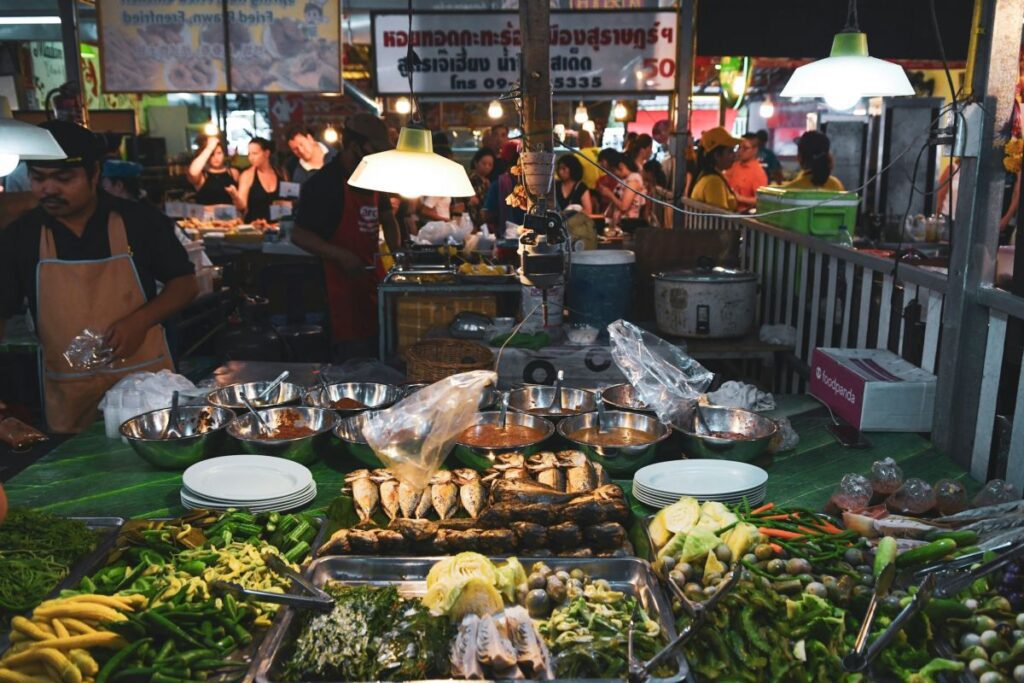
What’s changed: A new food zone has opened at Naka Market, with added seating, improved walkways and a wider choice of food vendors. The market has both covered and open-air areas; most of the food and drink zone is under canopies.
Phuket Weekend Market (Naka Market) is a good choice for an evening trip for street food, clothing, souvenirs and the atmosphere of a Thai bazaar. Naka Market (Naka Weekend Market, Naka Night Market) is a whole complex: the weekend market is joined by weekday street food trading and a daily food center. Admission is free, but it’s best to choose your visit day to suit your plans.
The market is located on Wirat Hong Yok Road, in the Mueang Phuket district, south of Phuket Town. Weekend trading starts at 16:00; official pages differ on closing time, so it’s best not to leave your shopping until late in the evening.
A new food zone has opened here with extra seating and improved walkways. Below are the schedule, directions, food and shopping; for other shopping spots, the guide to shopping in Phuket will be useful.
Naka Market schedule and operating hours
For a trip for clothes and souvenirs, choose Saturday or Sunday. If you want food, the complex also has other formats that operate on weekdays or daily.
According to the operator’s published information:
| Part of the complex | Days of operation | Time |
|---|---|---|
| Naka Weekend Market | Saturday and Sunday | Opens at 16:00; the homepage lists closing at 23:00, the contact page at 22:00 |
| Naka Weekday Street Food Market | Monday–Friday | 16:00–21:00 |
| Naka Food Center | Daily | 07:00–21:00 |
All hours are in Thailand local time. The weekday zone schedule and the 22:00 closing time for the weekend market are given on the contact page of the official Naka Market website.
A definitive closing time for the weekend market has not been established. The difference between the pages should not be taken as a confirmed extension of hours: it’s best to plan your main shopping and dinner before late evening.
The operator recommends arriving at opening, at 16:00: parking is easier at that time. Admission is free, so there’s no ticket to buy; your budget depends on transport, food and the items you choose.
How to get to Naka Weekend Market
Market address: Wirat Hong Yok Road, Mueang Phuket district, Phuket, postal code 83000. To set your destination, use Naka Market on Google Maps.
The operator describes the market as located near the Central Festival shopping center. This is a general landmark: choose your drop-off point using the market’s map, not the assumption that it is directly across the road from the shopping center.
Below are the operator’s published reference points for car trips:
| Starting point | Distance | Approximate time | Taxi or ride-hailing service (Grab) |
|---|---|---|---|
| Phuket Town | 3 km | About 5 minutes | — |
| Patong Beach | 15 km | About 25 minutes | 350–500 baht |
| Kata Beach or Karon | — | 35–45 minutes | 400–600 baht |
| Phuket Airport | — | 50–60 minutes | 600–800 baht |
Check the current price when booking. Travel time depends on the specific departure point and traffic conditions; a dash means no reference figure is given for that row.
You can also plan a trip to the market from Rawai, Surin and Bang Tao. Choose your route and check booking terms from your hotel or another exact departure point.
It’s best to plan your return before you arrive. If you want to use a songthaew, find out the route and schedule in advance: don’t count on a direct ride from the beach or an evening return trip without checking first.
The app also doesn’t mean the final price of every order will be the same. For example, the Bolt ride service warns that in Thailand, toll road fees are not included in the fare; this is a general condition, not a statement about a toll road on the way to Naka. To compare ways to travel, see transport options around Phuket.
Market zones and the new food zone
The operator calls Naka the largest weekend market in Phuket. It’s easier for visitors to navigate by shopping goal than to try to memorize all the aisles in advance.
Roughly, the range can be divided like this:
- Food and drinks — for dinner, a snack and getting to know Thai dishes.
- Clothing and accessories — clothes, shoes, bags and jewelry.
- Souvenirs and small items — gifts, phone cases, gadgets and other purchases.
This is a tip for your stroll, not an official site map. Start with what you came for: if your main goal is shopping, browse the market aisles first, then move on to dinner.
The operator announced the opening of the new food zone in an announcement on the market’s official website. Added seating, improved walkways and a wider choice of food vendors. These changes make it easier to combine choosing dishes with relaxing at a table.
The daily Naka Food Center is a standalone format within the complex. Its landmark is the Super Cheap store, opposite which it is located.
There’s a useful difference: the complex welcomes visitors for food outside weekends too, but that doesn’t mean all the clothing aisles operate daily. So it’s best to plan a trip for dinner and a trip for clothes separately.
Street food at Naka Market: what to try
It’s best to start choosing food by walking past the stalls. Look at the menus and portions before ordering: offerings can vary between vendors and on different days.
Options to look for at the market include:
- Seafood — grilled shrimp, squid and fish.
- Thai classics — pad thai, som tam, or papaya salad, and chicken with rice.
- Desserts — mango with sticky rice, banana pancakes, roti and coconut ice cream.
- Fruit and drinks — cut fruit, freshly squeezed juices and mango smoothies.
The operator separately lists mango with sticky rice and banana pancakes in the food center’s description. The other dishes can also be found among the stalls, but the availability of each of them on the day of your visit is not guaranteed.
Below are the operator’s published reference prices, not a price list from a specific vendor on the day of your visit:
| Dish | Reference price |
|---|---|
| Satay skewers | 20–30 baht |
| Serving of mango with sticky rice | 50–60 baht |
| Grilled lobster | 700–1,200 baht |
Check the current price of the portion you choose. Seafood doesn’t necessarily mean an inexpensive dinner: lobster and a small snack belong to different budgets.
The market sometimes has live music performances, but there’s no point planning around a regular program every evening. It’s best to eat perishable food on the spot, especially if your hotel is far away. For other food stops, see restaurants and street food in Phuket.
What to buy at the market and where you can bargain
At the Phuket weekend market, you can combine dinner with buying clothes and gifts. The operator lists shoes, bags, jewelry, fashion accessories, watches, perfume and clothing among the range.
Small purchases include fridge magnets, phone cases, gadgets and other electronics. You’ll also come across second-hand goods and stalls selling pets; the availability of a specific item or vendor is not guaranteed.
According to the operator’s published reference points:
| Item | Reference price |
|---|---|
| Graphic print T-shirt | 100–150 baht |
| Elephant-print pants | 200–250 baht |
Ask the seller you choose for the current price before buying. These amounts help estimate costs, but they don’t replace the price tag on a specific item.
At market stalls, prices can be negotiated; food and drink prices are fixed. Ask for a discount politely, without expecting a guaranteed result: the option to bargain doesn’t mean the seller has to give in.
Check your purchase before paying:
- Inspect the seams and fabric of clothing.
- Check fasteners, zippers and attachments.
- Check the actual size, not just the size label.
- For electronics and accessories, check that they work and that everything is included.
Don’t rush into the first item you like. Comparing similar products helps you judge whether the quality and price are right for you.
In an announcement about a seasonal sale, the operator advertises discounts of 30–50% on clothing and souvenirs from June to October. This is a limited-time offer: it does not promise a discount from every vendor, on the entire range, or a repeat of the promotion next season.
Tips for a comfortable visit: payment, rain and children
Bring cash in baht and small bills as a backup for shopping and food. Find out the payment method before buying: unified rules for accepting cards and mobile payments from all vendors have not been published, so relying only on cashless payment is inconvenient.
Getting ready for the market doesn’t require complicated preparation:
- Wear comfortable shoes — you’ll be walking through the aisles.
- Bring a backpack or a convenient bag for purchases so your hands stay free.
- Pack an umbrella or raincoat.
- Decide in advance how you’ll get back.
Naka has covered and open-air areas. Most of the food and drink zone is under canopies, but this does not make the whole visit rain-proof: open walkways and the road from your drop-off point may require an umbrella.
For families, arriving at opening time is a convenient choice. Before walking the aisles, agree on a clear meeting point in case you get separated; it’s best to show the child the spot in person.
The improved walkways in the new food zone do not confirm full stroller access across the entire complex. Choose your route based on actual conditions and leave room to change it.
If your hands are already full of food and bags, you can leave some purchases until after dinner. A simple break at a table helps keep the evening from turning into nonstop walking between stalls.
Alternatives to Naka Market in Phuket
For a different format, the Walking Street Sunday market in the Old Town, on Thalang Road, is a good fit. It’s a street stroll among historic facades, with the chance to look for craft and artisan souvenirs. To prepare, see a walk through Phuket Town’s Old Town.
Both markets operate on Sunday. If you want to visit both in one evening, factor in travel time and leave room for shopping, rather than counting on them operating on different days.
If weekends don’t work for you, the parts of the Naka complex itself offer alternative times:
- Naka Street Food Market — Monday–Friday, 16:00–21:00.
- Naka Food Center — every day, 07:00–21:00.
These options are for food trips, not a replacement for the whole weekend bazaar. The lineup of vendors and menus don’t necessarily match the weekend ones.
The choice is simple: for shopping aisles and dinner, come to the Phuket weekend market; for food on another day, go to the weekday zone or the food center. For a stroll through historic streets, choose the Old Town Sunday market.
Frequently Asked Questions ❓
When is the weekend market in Phuket open?
The Naka weekend market opens on Saturdays and Sundays at 16:00. The operator’s pages list different closing times: 23:00 on the homepage and 22:00 on the contact page, so it’s best not to leave your main shopping until late in the evening. The weekday street food market operates Monday to Friday, 16:00–21:00, and the daily food center runs 07:00–21:00. Check the schedule on the market’s official website before you go.
How much is admission to Naka Market?
Admission is free. Food and purchases are paid separately; transport costs should also be factored into your trip planning.
How do I get from Patong to Naka Market?
The operator gives a reference of 15 km and about 25 minutes, but the actual time depends on the departure point and traffic conditions. The market’s transport guide lists an approximate cost for a taxi or ride-hailing service (Grab) of 350–500 baht; check the current price when booking. Don’t count on an evening return songthaew without checking the route and schedule.
Do vendors at the market accept bank cards?
There are no published unified payment rules for all vendors. Bring cash in baht and small bills as a backup, and check with the vendor you choose whether they accept card or mobile payment before you buy.
Does the market operate in the rain?
The market has covered and open-air areas; most of the food and drink zone is under canopies. An umbrella or raincoat will come in handy for open walkways and the road from your drop-off point. Don’t count on the whole route being under cover.
How is Naka Weekend Market different from the Walking Street Sunday market in the Old Town?
Naka Market combines shopping aisles with clothing, souvenirs and food, as well as covered and open-air areas. The Sunday market on Thalang Road runs along a street in the Old Town and is suited to a stroll among historic facades and looking for craft souvenirs. Their operating days overlap on Sunday, so you can plan to visit both markets, allowing for travel time and time to shop.
Conclusion
The Phuket weekend market is a good choice for an evening of food and shopping, while the weekday zone and the daily food center let you come for food on other days. Admission is free; for the weekend bazaar, it’s convenient to arrive at the 16:00 opening and bring cash in small bills.
The new food zone adds comfort for dinner, but it’s best to choose clothing, souvenirs and dishes without rushing. Leave time to rest and don’t push your main purchases to the very latest hour.
Pick a suitable day and plan your return in advance. If you want to add other stops to the market, check out what to see in Phuket.


Prepared by MyThai.online editorial team.