In this article:
The Tourist Police reported that the launch ceremony for the intensified high-season operation took place on November 14 at 18:00. The event involved 115 representatives of the participating agencies; a live broadcast linked 33 tourist police stations across the country, and 1,500 officers were listed in the context of nationwide participation. A separate anti-crime campaign ahead of Loy Krathong was scheduled for November 14–20; this period does not limit all the work of the Tourist Police or the length of the high season (Current as of November 16, 2026).
What Is Known About the Nationwide Launch of the Operation
The Tourist Police Bureau’s official statement outlines the safety measures for the high season. Details were published in the Tourist Police Bureau’s official statement on the launch of the operation.
Nationwide participation does not mean that all officers attended the ceremony in person.
How Thailand’s Tourist Police Is Strengthening Protection Against Fraud
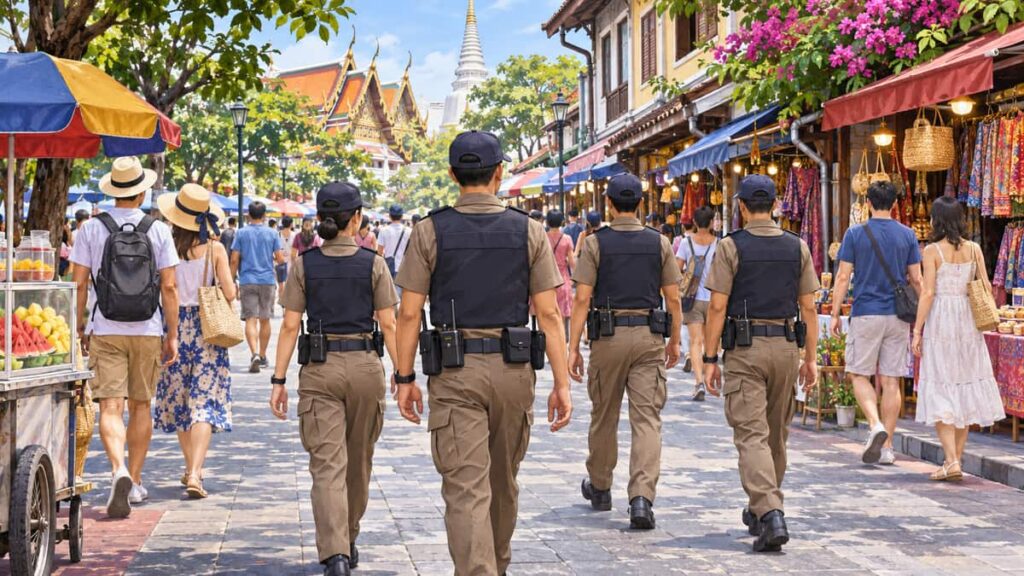
The Bureau said it plans to step up patrols at tourist sites and festival grounds, deploy proactive patrols, and warn about fraud, exploitation of tourists, and theft. For trip preparation, it helps to read the article on how to avoid fraud and theft in Thailand.
The Tourist Police leaflet lists six common schemes that travelers are advised to watch out for:
- unclear transport fares and routes;
- false claims that attractions are closed;
- disputes over renting jet skis and boats;
- inflated bills and hidden fees;
- unexpected bills at nightlife venues;
- scams involving gems and custom-made clothing.
This is a list of risks from the agency’s leaflet, not proof that each of the listed types of fraud has increased specifically during the high season. The list has a practical focus: several schemes involve payment and the terms of services, from transport and watercraft rental to bills at venues. That is why the police advice to check the price before paying is especially relevant.
The police separately identified the prevention of incidents on the water and the hazards of fireworks and firecrackers. These areas are named among safety priorities alongside patrolling tourist sites and festival grounds.
What to Do: How to Get Help by Calling 1155
Tourist Police hotline 1155 operates 24/7 and supports 8 languages. This information was published on the Tourist Police’s official page about the 1155 hotline.
Separately, the Thailand Tourist Police mobile app is available. It supports 6 languages, includes a chatbot and an emergency call system (SOS). When help is requested, the app transmits the user’s data and coordinates to the 1155 center. The app’s language support should not be confused with the hotline’s capabilities: the official statement gives a different number of languages for the hotline.
Check the price before paying, clarify the terms of the deal, and stay vigilant. These are recommendations from the Tourist Police itself. If a problem arises and you need help, you can call 1155 or use the app. Additional contacts are listed in the article about emergency numbers in Thailand.
Stepped-up measures do not rule out incidents, and they do not guarantee a refund or a particular outcome of a complaint review. Check service terms in advance, stay cautious, and contact the Tourist Police if you need help. Verify current information about the agency’s work against its official statements.
Prepared by MyThai.online editorial team.