In this article:
What changed: Thai FDA rules for phenobarbital and the conditions for permits and declaration of controlled medicines, depending on category and prescribed supply, have been clarified. The main text and FAQ have been corrected; official sources and a note about the full composition of the drug have been added.Updated: September 30, 2026
What changed: We clarified the Thai FDA rules for importing medicines: psychotropic drugs for up to 30 days with a prescription, for 31–90 days, and narcotic drugs only with a permit, with the application submitted no later than 15 days in advance; we corrected the item about Corvalol and Valocordin. We removed unverified figures on the number of pharmacies and hospital markups.
Current as of late September 2026. The information in this article is for reference only and does not replace consultation with your treating doctor. Thai FDA rules, lists of controlled substances, and retail prices may change. Always check official sources before buying medicines, and especially before traveling with a personal medicine kit.
Medicines and pharmacies in Thailand are one of the first topics every emigrant, relocating expat, and long-term tourist has to figure out. The kingdom’s pharmaceutical market works differently from Russia’s: some familiar medicines are sold right at supermarket checkouts, while for others you will need to see a local doctor. This guide explains in detail how Thai pharmacies work, what is available without a prescription, which medicines can be brought in only with a permit, and how to get a legal prescription. You will also learn where to find analogues of Russian tablets at the Boots and Watsons chains and at pharmacies with a green cross.
What pharmacies there are in Thailand and how they differ
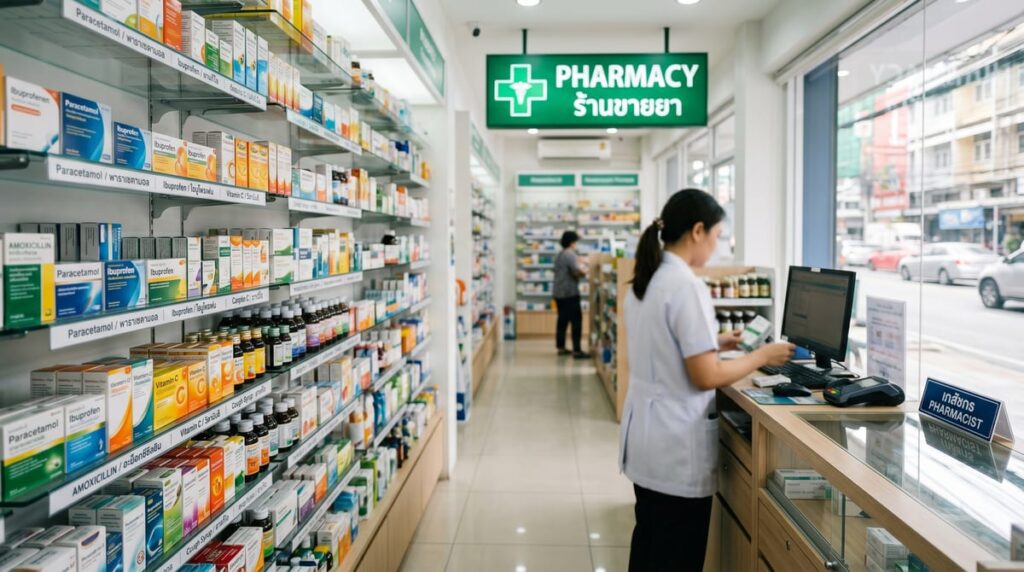
The kingdom’s pharmaceutical infrastructure is extremely well developed. Thailand has thousands of pharmacies. All of them can be divided into two main categories: outlets with a licensed pharmacist and shops without one. The former offer a full range of medicines, including prescription drugs, whereas the latter are limited exclusively to over-the-counter (OTC) products.
The market is anchored by large retail chains. Boots Thailand has more than 260 stores and is part of the Walgreens Boots Alliance corporation. Its main competitor, Watsons Thailand, runs a network of over 500 outlets across the country. Stores here are always clean, and the pharmacists speak good English. Besides Boots and Watsons, large malls and tourist areas also host other international formats, for example dedicated drugstore zones under the Pure Pharmacy chain, convenient counter-style “green-cross” pharmacies from independent chains, and small pharmacies inside Tops, Big C, and Lotus’s hypermarkets. If you need to understand how to choose a hospital in Thailand for buying a complex prescription medicine, pay attention to hospital pharmacies. The largest clinics, such as Bumrungrad International, Samitivej Sukhumvit or BNH Hospital, offer the widest choice of medicines. They often operate around the clock and serve not only local patients but also those interested in high-quality diagnostics or advanced dentistry in Thailand.
Besides chains and hospitals, you will find independent pharmacies on the streets, easy to spot by their green cross. They are usually cheaper, though their selection is more modest. Basic supplies such as paracetamol, adhesive bandages, inhalers and activated charcoal can be found right at the checkout of round-the-clock 7-Eleven and FamilyMart stores. Keep in mind that prices in such convenience stores are usually 20–30% higher than in pharmacies. This is convenient for late-night emergencies but not suitable for regular purchases.
What you can buy without a prescription at a Thai pharmacy
The Thai non-prescription segment easily covers basic needs. On the open shelves you will find good-quality painkillers based on paracetamol and ibuprofen, as well as strong antihistamines such as loratadine and cetirizine. For gastrointestinal problems, a pharmacist will readily sell you antidiarrheal medicines (Imodium), stomach remedies (Maalox, Buscopan), and rehydration powders (ORS, Royal-D). Local antiseptics, burn remedies, and reliable insect sprays are also always in stock.
The situation with antibiotics is quite unusual. Under Thai rules, many common antibiotics, for example amoxicillin, a pharmacist is permitted to dispense them without a doctor’s prescription. Many foreigners are surprised by this easy access, but it hides a serious threat to health.
Self-medicating with antibiotics is dangerous. The fact that a drug is formally available at the neighborhood pharmacy does not mean you should take it at the first signs of a cold. Choosing the wrong medicine for a viral infection will have no therapeutic effect, but it is very likely to trigger bacterial resistance or a severe allergic reaction. Always consult a specialist.
Which medicines in Thailand are sold only by prescription
The Thai Food and Drug Administration (Thai FDA) strictly regulates the circulation of psychotropic and narcotic substances. These categories of medicines are not available for free sale. First and foremost, this concerns psychotropic drugs (Schedules II–IV under the Thai FDA classification). The following are dispensed strictly on the prescription of a Thai doctor: alprazolam (Xanax), diazepam (Valium), clonazepam, lorazepam and methylphenidate (Ritalin).
Even stricter control applies to narcotic substances of the second category (Schedule 2 narcotic). Obtaining such medicines requires not only a prescription but also special, strict record-keeping. This group includes codeine, morphine, fentanyl, oxycodone, methadone and tramadol. Detailed lists of controlled substances can always be found on the official Thai FDA website.
In addition, a prescription and registration of your passport details at the pharmacy are required to buy insulin. The same applies to hormone replacement therapy (HRT), antidepressants (SSRIs and SNRIs), potent cardiovascular medicines, and antiepileptic drugs. In practice, the pharmacist will carefully review your prescription from a Thai doctor. Documents from Russia or CIS countries simply will not be accepted here.
Analogues of Russian medicines in Thai pharmacies
Instead of looking for familiar names, focus on the international nonproprietary name (INN). Local pharmacists know it very well. The table below lists the most popular substitutes.
| Russian medicine | INN | Thai analogues (brands) | Sales category |
|---|---|---|---|
| Paracetamol | Paracetamol | Tylenol, Panadol, Sara, Calpol | Over the counter |
| Nurofen | Ibuprofen | Ambufen, Ibumax, Gofen | Over the counter |
| Claritin | Loratadine | Klaryne, Clarityne, Claritydine | Over the counter |
| Smecta | Diosmectite | Gastolite, Gaszym | Over the counter |
| Imodium | Loperamide | Imodium | Over the counter |
| Cetrin | Cetirizine | Cetirizine | Over the counter |
| Maalox | Algeldrate + Magnesium hydroxide | Maalox, Antacids | Over the counter |
| No-Spa | Drotaverine | No-Spa, Drotaverine (generic) | Over the counter |
| Buscopan (as an alternative antispasmodic) | Hyoscine butylbromide | Buscopan | Over the counter |
| Activated charcoal | Activated charcoal | Carbo | Over the counter |
| Regidron | Oral Rehydration Salts | ORS, Royal-D | Over the counter |
| Enterofuril | Nifuroxazide | Ercefuryl | Over the counter |
Important warning! For symptoms of dengue fever, which manifest as fever lasting longer than two days, aspirin and ibuprofen are strictly prohibited. These drugs significantly increase the risk of internal bleeding. Only paracetamol may be used to reduce fever. In any case, get a blood test immediately and see a doctor. Any selection of analogues must also be made only with a specialist who knows the INN.
What to bring to Thailand from Russia
When packing, follow one simple rule. Bring specific medicines that you take in courses or on a long-term basis, since they may be banned, hard to find, or sold under a different formulation. Thai pharmaceuticals are very well developed, but switching to a local brand without a doctor’s supervision can be risky.
Bring a reliable supply of antihypertensive medicines from your specific manufacturer, inhalers for asthma, and specific antidepressants. You will also need your usual hormonal pills, antiepileptic medicines, and contraceptives of the exact formulation.
A basic travel kit for a trip of 1–4 weeks is in most cases easier to buy on site. The selection at Boots, Watsons, and hospital pharmacies covers almost everything. The minimum list worth having: paracetamol-based fever reducer, antidiarrheal (Imodium), rehydration salts (ORS, Royal-D), activated charcoal (Carbo), antihistamine (Cetirizine, Loratadine), antibacterial ointment, mosquito repellent, and SPF 50+ sunscreen. A pharmacist can find most of this in a minute, so bringing it all from home is excessive. If you want a plan optimized for baggage weight, see our detailed checklist for a travel medicine kit for 1–2 weeks — it lists specific items and priorities.
How to buy a prescription medicine in Thailand: step by step
If you need a prescription medicine, the steps are fairly simple.
Step 1: Book an appointment with a doctor. The fastest route is private clinics and hospitals, such as Bumrungrad or BNH. They have English-speaking doctors, there are almost no queues, and costs can often be covered directly by insurance (cashless). Public hospitals are cheaper, but be prepared for long waits and language barriers.
Step 2: Attend a consultation. The doctor will examine you and write a legal Thai prescription. Don’t forget to bring your passport; it is required.
Step 3: Make the purchase. You can buy the medicine you need at the hospital pharmacy right after your appointment, or at a large chain store with a pharmacist.
The question of cost has two sides. For medicines for chronic conditions, prices in Thailand can be 40–50% lower than the global average. At the same time, medical services are getting more expensive quickly, and private hospitals can mark up simple items, such as saline solution, many times above the pharmacy price. That is exactly why we strongly recommend getting travel insurance for a trip to Thailand. For long-term prescriptions and chronic diagnoses, the best solution is an international policy. For details on choosing a suitable IPMI, read our guide “Medical Insurance for Expats in Thailand”.
Prohibited and controlled substances: import rules
The kingdom’s customs rules leave no room for casual attitudes. Violations carry severe criminal liability, so lists of prohibited substances must be checked especially carefully.
The main requirements to keep in mind:
- Phenobarbital is a controlled psychotropic substance under Schedule IV. For a personal supply prescribed to you of up to 30 days, the Thai Food and Drug Administration (Thai FDA) does not require a permit, but a prescription or doctor’s document is required under the agency’s requirements. For 31–90 days, an IC-2 permit is required; the application must be submitted at least 15 days before the trip. Check the full composition of the specific medicine and the rules for each active ingredient.
- Psychotropic substances (Schedules II–IV). They may be imported in amounts up to a 30-day supply with a prescription or a doctor’s certificate. If the course is for 31 to 90 days, a Thai FDA permit is required. The application is submitted online no later than 15 days before the trip.
- Narcotic drugs (Schedules II–III). Import is permitted only with a Thai FDA permit. The application is submitted no later than 15 days before the trip, and the permitted supply is up to 90 days.
- Cannabis and CBD. Since June 25, 2025, recreational cannabis in Thailand has again been reclassified as a medical category. Only products with microdoses of THC (up to 1.6 mg per serving) and mandatory FDA certification remain legal.
For a personal prescribed supply of psychotropic drugs of Schedules II–IV of up to 30 days, a Thai FDA permit is not required under section A.2.1 of the agency’s guidance; section C.2 also exempts such a supply from customs declaration if there is a prescription or a document from the treating doctor. The document must contain the information listed in section 1.2 of this guidance. For a personal prescribed supply of narcotic drugs of Schedules II–III for up to 90 days and psychotropic drugs of Schedules II–IV for 31–90 days, an IC-2 permit is required, and the drugs and documents must be presented in the red channel. Medicines must be kept in their original labeled packaging; documents must be kept with you throughout the trip. When a permit is required, the application is submitted through the official Thai FDA portal for travelers at least 15 days before the trip.
Where to find a 24/7 pharmacy in Bangkok, Pattaya, and Phuket
Falling ill at night far from home is unpleasant, but there is a way out. Round-the-clock pharmacies in Thailand are, as a rule, pharmacies attached to large private hospitals.
In Bangkok, you can always count on the pharmacy on the premises of Bangkok Hospital. If you are staying in Pattaya, a similar service is provided by Bangkok Hospital Pattaya. In Phuket, for prescription medicines at night, you can turn to Bangkok Hospital Phuket or Bangkok Hospital Siriroj.
Some Boots and Watsons stores close fairly late, but full 24/7 hours are rare for them. It is always best to check current hours in map apps on the spot. In small towns and on remote islands, hospitals are also the main overnight option. If you need plain paracetamol or an adhesive bandage at night, you can buy them at the checkout of any round-the-clock 7-Eleven.
Frequently Asked Questions ❓
Can you buy insulin without a prescription in Thailand?
No, insulin is a controlled medicine. It is only sold with a prescription from a Thai doctor and mandatory registration of passport details at the pharmacy.
What should I do if my medicine is not sold in Thailand and I cannot bring it from Russia?
Book a consultation with a local specialist. The doctor will select a legal alternative available on the Thai market or adjust your treatment plan.
Are Thai prescriptions accepted in Russia for insurance reimbursement or for continued treatment?
Insurers usually require a notarized translation of the Thai prescription into Russian. To continue treatment in the Russian Federation, you will have to see a Russian doctor again.
Are there Russian-speaking pharmacies or pharmacists in Thailand?
In resort areas such as Phuket or Pattaya, you can find Russian-speaking consultants. However, only a licensed doctor has the right to write prescriptions and give professional medical advice.
What rules apply to medicines containing phenobarbital?
Phenobarbital is a controlled psychotropic substance under Schedule IV. For a personal supply prescribed to you of up to 30 days, the Thai Food and Drug Administration (Thai FDA) does not require a permit, but a prescription or doctor’s document is required under the agency’s requirements. For 31–90 days, an IC-2 permit is required; the application must be submitted at least 15 days before the trip. Check the full composition of the specific medicine and the rules for each active ingredient.
Can I order medicines for delivery within Thailand?
Yes, many pharmacies arrange delivery of over-the-counter products through services such as Grab. Couriers do not deliver prescription medicines. You have to pick them up in person.
What should you do if the symptoms resemble dengue and all you have is ibuprofen?
The course of each illness is individual, so do not self-medicate under any circumstances. Ibuprofen is prohibited in dengue because of the risk of bleeding. If you do not have paracetamol, go to the nearest clinic immediately.
How do visa type and length of stay affect access to treatment at Thai pharmacies?
Tourists, whether entering visa-free or on a tourist visa, have access to the same retail network as residents, but a regular course of prescription medicines is realistic only for those who live here long-term and have an “own” doctor. If you plan to stay long-term, it is important to understand your visa type in advance. Details are in our guide “Visas to Thailand”.
Conclusion
The kingdom’s pharmacy network is transparently organized and in many ways more convenient than Russian retail. To buy basic OTC products, it is enough to stop by Boots, Watsons, or the nearest convenience store. However, prescription drugs, psychotropic substances, and antibiotics require a visit to a Thai doctor and strict adherence to medical protocols. Selecting complex analogues must always rely on the INN and be accompanied by medical supervision.
Remember that rules on importing medicines, Thai FDA lists, and retail prices can change. Be sure to check official information on the regulator’s websites before your trip. Read our full guide to life in Thailand for emigrants, get reliable medical insurance, and enjoy a safe life in the kingdom.
Sources
- UK Government — Healthcare and medical services in Thailand
- Government agency — Antibiotics’ Use in Thailand: Community Pharmacists’ Knowledge, Attitudes and…
- Samitivej Hospital — Hospital in Bangkok, Thailand
- Ministry of Public Health of Thailand — Frequently Asked Questions
- Embassy of Thailand in Moscow — Importing medicines into Thailand
- Ministry of Public Health of Thailand — FDA THAI: Food and Drug Administration, Thailand
Prepared by MyThai.online editorial team.