In this article:
What changed: Starting September 15, 2026, the 60-day visa exemption has been abolished. Holders of ordinary Russian passports enter without a visa for up to 30 days, 30 days are granted to citizens of 60 countries, 15 days to citizens of 2 countries, and visa on arrival remains for 3. A rule for travelers who entered before September 15 and a note on extending the visa exemption for Russian passport holders have been added.
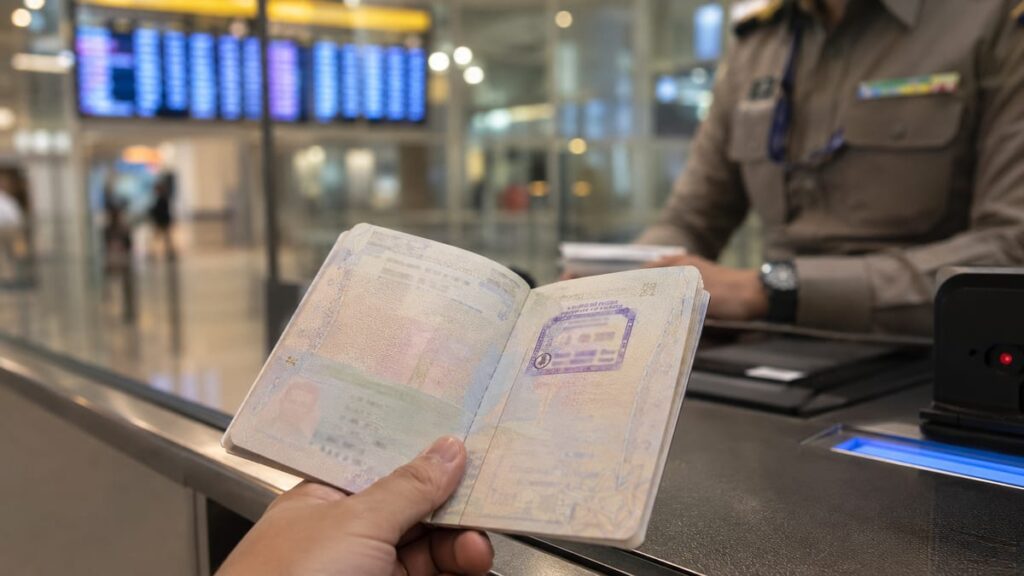
Thailand passport stamps are the very mark at the border that decides how many days you can legally stay in the country without a visa. It sounds mundane, but the period in the stamp determines whether you reach the beach without running around immigration offices. And a lot has changed in 2026. The essentials to know right away, before scrolling any further: as of September 15, 2026, the 60-day visa exemption has been abolished: citizens of most of the affected countries now get 30 days, and holders of ordinary Russian passports also get up to 30 days, under a bilateral agreement. We’ll cover below who this affects, from which date it applies, and what to do if you’re already in Thailand, calmly and without panic. Current as of September 30, 2026. 🇹🇭
Official Visa-Exemption Entry Limits in 2026 ✈️
The most notable change this year is the cancellation of the generous 60-day regime, which had applied since July 2024 to about 93 countries and territories. On May 19, 2026, the cabinet approved the decision. On August 31, 2026, announcements from the Ministry of Interior were published in the Royal Gazette, and as of September 15, 2026, the 60-day visa exemption no longer applies. Each country now has a single visa-exemption regime, so allowed stays differ by nationality. The details were announced at a briefing by the Ministry of Foreign Affairs of Thailand (MFA), and they were also recorded in an official press release from the Government of Thailand.
Breaking the revision down, the picture looks like this. 30-day visa exemption goes to citizens of 60 countries and territories. 15 days are granted to citizens of 2 countries — Seychelles and Mauritius. Visa on Arrival is kept only for 3 countries — Azerbaijan, Belarus, and Serbia. The final lists were confirmed by the Ministry of Foreign Affairs of Thailand and the Tourism Authority of Thailand (TAT); separate bilateral visa-exemption agreements continue to apply. Russia is not on the list of 60 countries: holders of ordinary Russian passports still enter without a visa, but for up to 30 days, under the agreement between Thailand and Russia, as reported by the Thai Embassy in Moscow. For most of those affected by the cancellation of the 60 days, the visa exemption becomes 30 days. In other words, the country is effectively returning to the regime that applied before the previous liberalization.
For travelers who entered earlier, there is a transitional rule. The Ministry of Foreign Affairs of Thailand explained: foreigners who entered before September 15, 2026, may stay until the last day of the previously permitted period. So a 60-day stamp already issued remains valid until its end, while the new periods apply to entries from September 15. Use the date actually stamped for you at the border.
A separate and no less important issue for travelers is repeat visa-exempt entries by land. Starting September 15, a limit applies, as confirmed by the Tourism Authority of Thailand (TAT): no more than two visa-exempt entries through land checkpoints per calendar year. This is a direct blow to the practice of visa runs, which are short trips abroad to get a new stamp. Amid the crackdown on long-term illegal stays, according to the Public Relations Department of Thailand (PRD), since the start of 2025, entry has already been refused to about 2,900 foreigners.
When Immigration Refuses Entry
The main restriction concerns land crossings: visa-exempt entries through land borders are now limited to no more than two per calendar year. But there is no unlimited allowance for air entries either. Immigration officers have broad powers under the Immigration Act B.E. 2522 and may refuse entry if they suspect a person is using “border runs” to effectively live in the country permanently. We covered this in more detail in the article on tightening border control · RU.
What is important to understand about such a refusal? Don’t count on the decision being reversed immediately at the desk. It is made by the officer and is largely subjective, and the available appeal procedures are limited and time-sensitive. So it is more reliable to reduce the risk in advance than to argue at the border. The authorities explain the tightening as a matter of security and combating abuse of the visa exemption.
What usually raises suspicion? Frequent short entries one after another, no return ticket, or a clear lack of funds for the trip. This is not a verdict or a formula, but rather a set of signals the officer uses to draw conclusions. We’ll go over specific document and money requirements in the section on entry, so that the reasons for refusal are not confused with the list of what you should carry.
How to Legally Extend Your Stay
The good news: a visa-exemption stamp is not a dead end. It can be extended once, by another 30 days, at an immigration office, and this must be done before the current period expires. The extension fee is 1,900 baht, the decision is made by the immigration officer. Holders of ordinary Russian passports should keep one caveat in mind: the consular website of the Russian Ministry of Foreign Affairs states that for visa-exempt entry, an extension is granted for only one week and, as a rule, only in special cases (hospitalization, participation in court proceedings). So do not plan your trip around extending the visa exemption. The procedure is straightforward: go to the office in advance, not on the last day, with your passport and the standard set of documents.
If your plans are more serious than a couple of extra weeks, it is wiser to look at a visa right away. Our step-by-step guide to extending a visa covers the steps and nuances in detail. For those traveling specifically for tourism who want more time, it is simpler to apply for a tourist visa while still at home.
For those who prefer doing everything online, there is an electronic visa (e-Visa) — it is applied for remotely, without visiting a consulate. The logic is simple: first check whether a 30-day extension is enough, and if not, choose a suitable visa in advance rather than waiting until the stamp starts to run out.
Entry Requirements for Visa-Exempt Travel 📋
What is usually checked at the border when you enter visa-free? The basic set is predictable: a valid passport, proof of onward travel (a return or transit ticket), and an accommodation booking. Sometimes proof of financial means is also required, and this is an important caveat.
It is best to check exact cash amounts in advance, as immigration may ask for proof of funds. Official guidance on money is published on the websites of Thai embassies and consulates. For example, for visa-exempt entry they usually refer to having funds for the trip per person or per family. In practice, though, the amount may depend on the checkpoint and the individual officer. So keep a reasonable buffer and check the requirements in advance with your Thai embassy or consulate and your point of entry, rather than relying on a “magic number” from other people’s reviews. Right before arrival, a mandatory step is to fill in the digital arrival card TDAC · RU (Thailand Digital Arrival Card); without it, there will be questions at the border.
By the way, all of this is directly related to the previous section. The more fully you meet the requirements (an onward flight ticket, a booking, a reasonable cash buffer), the fewer reasons the officer has to doubt the purpose of your trip. A well-prepared set of documents does not guarantee entry one hundred percent, but it noticeably reduces the risk of refusal.
Strategy for Frequent Travelers
This section is for people who travel to Thailand often or, as they say, “living on stamps.” The scheme of endless visa runs used to work somehow. Now, with the return to 30 days, it has become clearly risky. As a reminder: visa-exempt entries through land borders are now limited to no more than two per calendar year, and abuse of border runs is grounds for refusal at immigration’s discretion.
That is why it is worth weighing the risks soberly before planning another round. About where to go for a visa run and what risks are involved, we have a separate article. But the overall conclusion is simple: for a long stay, it is wiser to arrange a suitable visa, either a tourist visa or one of the long-term options.
Now a separate note on overstays, because it is the most common way to damage your standing with Thai immigration. The fine is 500 baht for each day of overstay, but no more than 20,000 baht. The difference that matters next: if you turn yourself in voluntarily, you simply pay the fine. But if you are arrested for overstaying, you face deportation and an entry ban. The math is obvious: legal planning costs less and is less stressful than the risk of ending up on a blacklist.
Frequently Asked Questions ❓
How many days does a visa-exemption stamp in Thailand give in 2026?
From September 15, 2026, the 60-day visa exemption no longer exists. Citizens of 60 countries and territories get 30 days, citizens of 2 countries (Seychelles and Mauritius) get 15 days, and for 3 countries (Azerbaijan, Belarus, Serbia) visa on arrival is kept. Russia is not on these lists: holders of ordinary Russian passports enter without a visa for up to 30 days under the bilateral agreement between Thailand and Russia.
Is the cancellation of the 60-day visa exemption already in effect?
Yes. Announcements from the Ministry of Interior were published in the Royal Gazette on August 31, 2026, and as of September 15, 2026, the 60-day visa exemption has been abolished. At the border, rely on the period that will actually be stamped for you.
What happens to those who are already in Thailand on a 60-day stamp?
The Ministry of Foreign Affairs of Thailand explained that those who entered before September 15, 2026, under the previous rules, may stay until the last day of the previously permitted period. Therefore, a 60-day stamp already issued remains valid until its end, so use the date in it.
Can a visa-exemption stamp be extended, and how much does it cost?
Yes, a visa-exemption stamp can be extended once, by another 30 days, at an immigration office before the period expires. The fee is 1,900 baht, and the decision rests with the immigration officer. Holders of ordinary Russian passports should note that the consular website of the Russian Ministry of Foreign Affairs states that under the visa exemption, an extension is granted for only one week and, as a rule, only in special cases, so do not count on it in advance. It is better to submit documents early rather than on the last day.
How many times can you enter Thailand visa-free in a row, and is there a limit?
Yes, there is now a limit. From September 15, 2026, visa-exempt entries through land borders are limited to no more than two per calendar year, which is a blow to the practice of visa runs. Beyond this, immigration officers may refuse entry if they suspect abuse of the visa exemption. According to the Public Relations Department of Thailand (PRD), entry has already been refused to about 2,900 foreigners since the start of 2025.
What are the penalties for overstaying (exceeding the permitted length of stay)?
The fine is 500 baht for each day of overstay, but no more than 20,000 baht. If you come in voluntarily, you pay the fine. But if you are arrested for overstaying, you face deportation and an entry ban. Do not delay your departure.
Conclusion
The main change in 2026 is the return to the 30-day visa exemption instead of 60. The new rules take effect on September 15, 2026. Holders of ordinary Russian passports get up to 30 days under a bilateral agreement, and 60-day stamps issued before this date remain valid until the end of their period. Plan your trip with a buffer, and for a longer stay, choose a visa in advance, for example through our step-by-step guide to extending a visa or a tourist visa. And always check the date right at the airport: it is the period in your stamp, not general rules from the internet, that determines until which day you may legally stay in the country without a visa. Current as of September 30, 2026. Rules change, so before traveling, check official sources (the Thai Embassy, Thailand Immigration Bureau).
Sources
- Ministry of Foreign Affairs of Thailand: Summary of the Weekly Press Briefing on May 19, 2026
- Thai government agency: Warning of Overstay in Thailand | Samut Prakan Immigration
- UK Government — Entry requirements – Thailand travel advice
- Public Relations Department of Thailand: Cabinet Approves Revision of Thailand’s Visa Exemption…
- Public Relations Department of Thailand: Visa Runs Limited to 2 Under New Thailand Immigration…
Prepared by MyThai.online editorial team.