In this article:
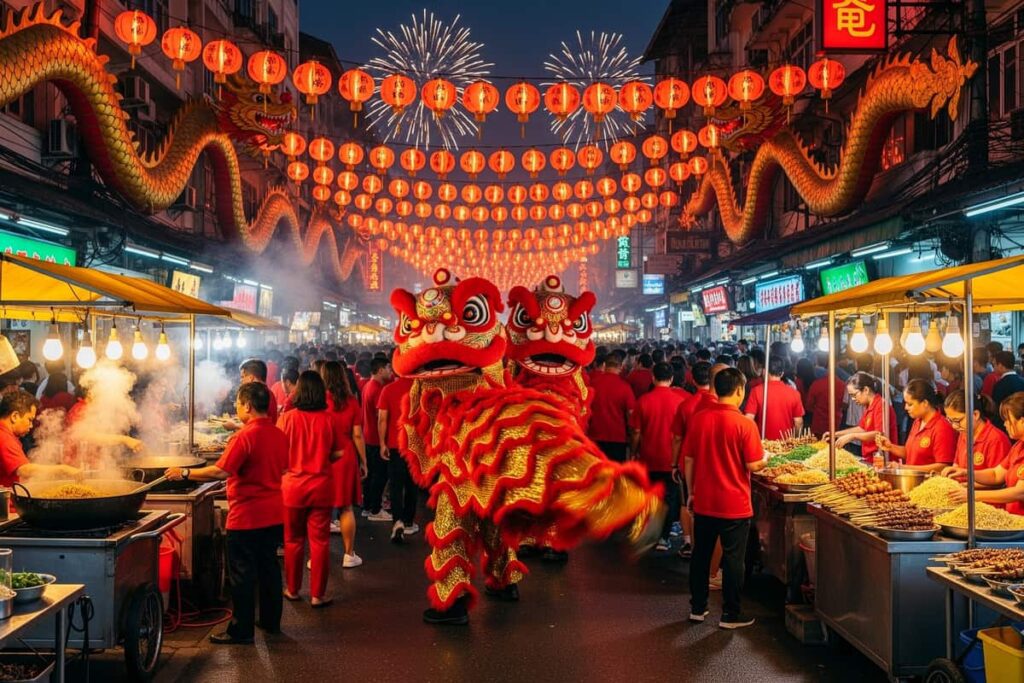
Chinese New Year in Thailand 2027 will take place on February 6–8 and will herald the start of the Year of the Fire Goat in the Eastern zodiac. It is one of the most spectacular holidays in the country: streets of Chinese neighborhoods are flooded by a red-and-gold sea of lanterns, the air trembles with drums and firecrackers, and dragon and lion dances turn ordinary evenings into a real carnival. The main celebration areas are the Yaowarat district in Bangkok and the old town of Phuket Town. Admission to all street events is free. If you find yourself in Thailand in early February, this is an event you should not miss.
What is this holiday?
Chinese New Year is the largest holiday for the Chinese diaspora around the world, and Thailand is no exception. By various estimates, up to 14% of the country’s population has Chinese roots, and the influence of Chinese culture can be traced in the cuisine, temple architecture and business traditions.
The holiday is marked according to the lunar calendar and falls on different dates each year, between January 21 and February 20. In 2027, the New Year falls on February 6, opening the cycle of the Fire Goat. The Goat in Chinese astrology symbolizes a peaceful nature, creativity and prosperity, while the fire element adds energy and courage.
For Thais of Chinese descent, this is first and foremost a family holiday: a time for reunion at the shared table, honoring ancestors and wishing for prosperity. For tourists, it is a unique chance to see the blending of Thai and Chinese cultures: Buddhist temples stand alongside Chinese shrines, and Thai street food alongside Cantonese delicacies. You won’t find this mix anywhere else but in Southeast Asia.
When and where it is celebrated
Dates: February 6–8, 2027. The main day is February 6 (the eve and the first day), but street events and fairs usually last two to three days.
Yaowarat, Bangkok — the epicenter of the celebrations. The Chinatown district stretches along Yaowarat Road in old Bangkok. On holidays, the street is closed to vehicles and turns into a pedestrian zone with street stages, markets and processions. The event often opens with the participation of members of the royal family or senior officials.
Phuket Town — the second major center of celebrations. Phuket is home to one of Thailand’s oldest Chinese communities, and Chinese New Year is celebrated here on a particularly grand scale: processions pass along Thalang, Dibuk and Phang Nga streets in the Old Town.
An important point: Chinese New Year is not an official day off in most provinces of Thailand. The official day off applies only in 5 southern provinces — Pattani, Yala, Narathiwat, Satun and Songkhla. However, many private companies, especially in retail, give employees days off.
Traditions and how it’s celebrated
Red and gold are the holiday’s main colors. Streets are decorated with lanterns, paper dragons and banners with wishes of good luck. Here’s what you’ll see on the streets:
Dragon and lion dances. Long dragon figures race through Yaowarat, carried by dozens of dancers. Lion dances are performed to a deafening accompaniment of drums and cymbals, and they are believed to scare off evil spirits. By the way, according to local tradition, shops and restaurants “invite” the dancing lion to their entrance for good luck in business.
Firecrackers. No celebration goes without them. The crackle of firecrackers echoes through all of Chinatown from morning until late at night. Don’t be alarmed, this is a normal part of the holiday.
Red envelopes (ang pao). Elders give younger people red envelopes with money. If you go into a local store or restaurant, you may see envelopes at the cash register: this is a gesture of gratitude to regular customers.
Festive food. On every corner there is Cantonese-style duck, whole fish (a symbol of abundance), dumplings and sweet rice balls. In addition, tangerines and oranges serve as symbols of wealth, so they are given to one another and arranged on altars.
Religious rituals. Thais of Chinese descent visit temples (both Buddhist and Chinese), light incense and offer food to ancestors.
Practical tips for tourists
How to get to Yaowarat. The most convenient way is by the MRT subway to Wat Mangkon station (the exit leads right into Chinatown). You can also get there by river taxi on the Chao Phraya to the Marine Department or Ratchawong pier. Yaowarat begins within a 5–10 minute walk. Taxis and tuk-tuks are not the best choice on festive evenings: the traffic jams in the area are colossal.
What to bring. Comfortable shoes, since you’ll be walking a lot. Cash, since small bills and coins will come in handy for street food and ang pao. A power bank for your phone, because you’ll want to take a lot of photos. And patience, since crowds in Yaowarat can be dense.
Clothing. There are no restrictions. Red clothing is welcome, since it is the color of luck. If you plan to visit a temple, remember the dress code: covered shoulders and knees.
Alcohol is sold freely; the holiday is not subject to sales bans.
Safety. Keep an eye on your pockets in crowds, which is standard advice for any mass event. Firecrackers can be loud: if you are traveling with small children, bring earplugs.
If you are only planning a trip to Thailand · RU, early February is a great time: dry season, comfortable weather, and Chinese New Year will be a vivid addition to your itinerary.
Frequently Asked Questions ❓
When is Chinese New Year celebrated in 2027?
The main celebrations take place February 6–8, 2027. The main day is February 6 (the first day of the new year on the lunar calendar). Street events in Yaowarat and Phuket Town usually begin on the evening of February 5 (the eve) and last two to three days.
Do you need to pay for admission to the events?
No, all street events, processions and fairs are free. Individual restaurants and private parties may set their own prices, but the main program on the streets of Yaowarat and Phuket Town is freely accessible.
Is Chinese New Year a day off in Thailand?
In most provinces — no. The official day off applies only in 5 southern provinces: Pattani, Yala, Narathiwat, Satun and Songkhla. In practice, though, many private companies, banks and stores owned by Thais of Chinese descent close or operate on reduced schedules.
Which year of the Chinese zodiac begins in 2027?
2027 is the Year of the Fire Goat. The Goat is the eighth sign of the 12-year cycle of the Eastern zodiac. The fire element repeats every 60 years: the previous Year of the Fire Goat was in 1967.
What is the best way to get to Yaowarat in Bangkok?
The most convenient way is the MRT subway, Wat Mangkon station. The exit leads right into the center of Chinatown. You can also use the river express on the Chao Phraya River: the Ratchawong and Marine Department piers are a few minutes’ walk from the start of Yaowarat Road.
Conclusion
Chinese New Year in Thailand is three days of red lanterns, dancing lions and the best street food of the year. Yaowarat in Bangkok and Phuket Town are the two main places where the celebration unfolds at full force. Everything is free, everything is outdoors, and it is easy to get there by subway. 2027 is the Year of the Fire Goat, and if you find yourself in Thailand in early February, don’t miss this holiday.